


























Select your region or country.
微流体装置中培养的神经元的3D成像
2025年8月18日发布
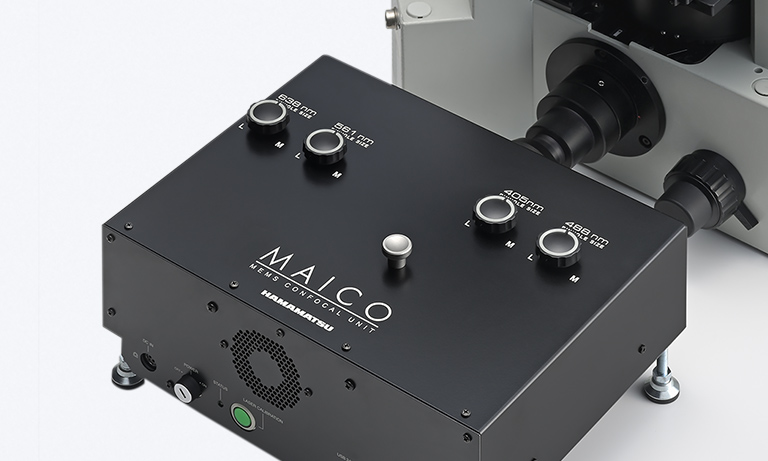
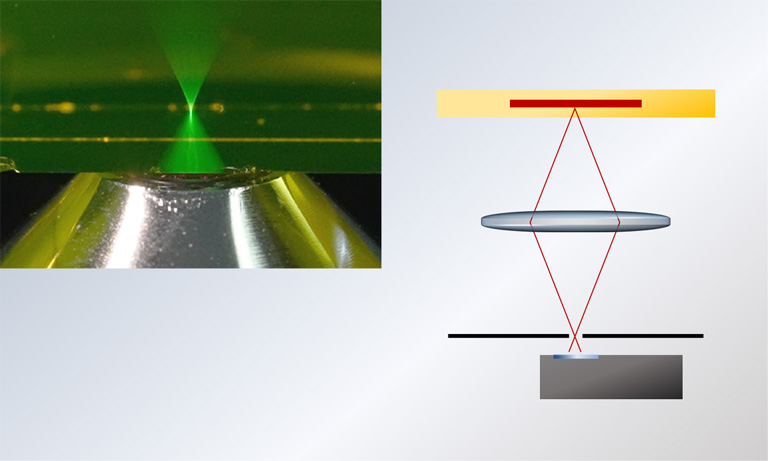
Research Institute of Electrical Communication (RIEC)下属Tohoku University的The Nano-Integration Devices and Systems Laboratory专门从事类脑非冯诺伊曼计算及相关硬件研究的基础技术。Hideaki Yamamoto副教授的研究小组(Nano-Integration Neurocomputing Systems Group)在这个实验室里结合半导体精密加工、神经细胞培养和数学建模,开发出自下而上分析大脑功能的新体外系统。在这些体外系统中,培养的神经元偶尔聚集形成3D结构。该小组引进了针对这些聚集的神经元进行3D成像的MAICO MEMS共聚焦装置。
我们采访了Hideaki Yamamoto教授和Hakuba Murota先生,他们负责使用MAICO MEMS共聚焦装置进行细胞成像和分析,以了解采用MAICO MEMS共聚焦装置的背景、使用经验以及未来的研究前景。
当前研究
您能介绍一下您的研究吗?
我们当前的研究重点是开发可作为构成动物大脑的复杂神经元网络模型的新体外系统。例如,虽然心脏或癌症相关研究已发展到可通过培养细胞重现生理功能和病理状况的程度,但目前尚未针对大脑等极其复杂组织的有效模型系统,我们认为这是一个关键问题。又比如,当在平皿中培养从大鼠皮层获得的神经细胞时,这些细胞会形成一个呈现不同于活组织活动模式的细胞网络。因此,我们的研究动机之一是使其活动模式更像脑组织中的活动模式。我们小组的成员都有电子学背景。因此,在类器官等新细胞培养技术快速发展的同时,我们希望充分利用半导体制造技术,用活细胞重现大脑中的局部布线结构,从而实现这一目标。
具体来说,我们利用我们半导体洁净室中的设备(图 1),创建了引导神经细胞粘附和延伸其神经突的微流体装置(图 2)。在微流体装置中培养神经细胞时,神经细胞会在每个细胞内形成密集的连接(通孔),然后通过连接细胞的微通道延伸其神经突,进而形成神经网络。据称,这种密集连接的细胞群体彼此之间相互作用较弱的结构是真实大脑皮层神经回路的特征。我们通过使用该装置培养神经细胞进行实验,以部分重现类似于大脑中所见的网络结构。

Hideki Yamamoto副教授
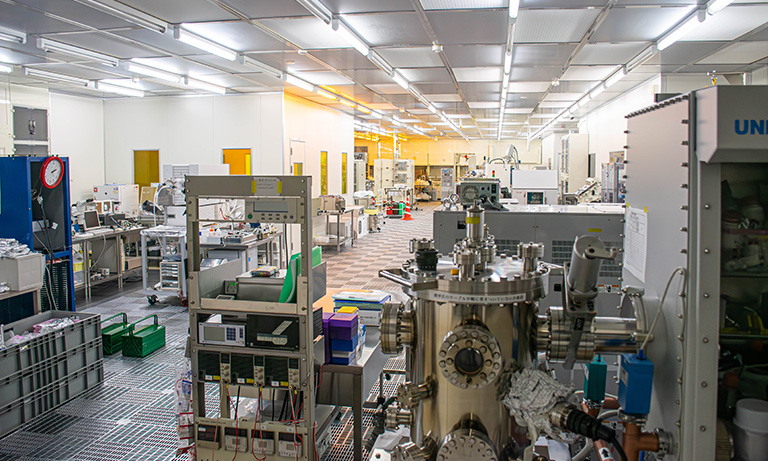
图1:制造微流体装置和其他设备的洁净室
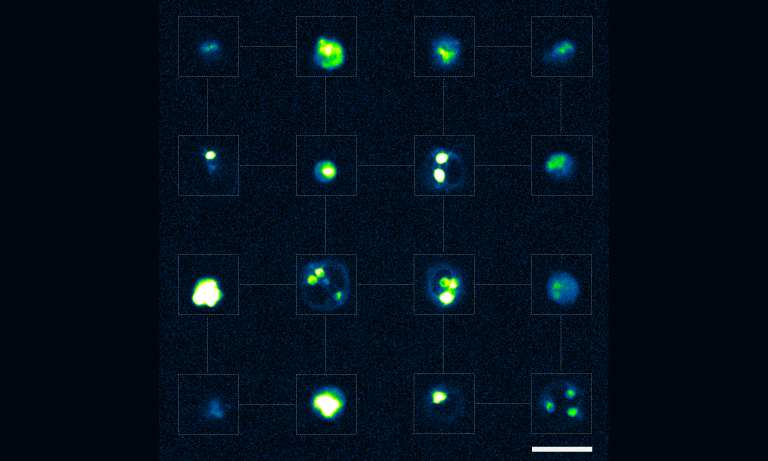
图2:微流体装置中培养的神经元
神经成像面临的挑战

Hakuba Murota 先生
神经元成像面临哪些挑战?
我们通常使用带sCMOS相机的落射荧光显微镜对培养的神经细胞进行成像。但是,当细胞培养持续几天时,具有高细胞密度的区域形成聚集体并发展成3D结构。我们无法使用传统的荧光显微镜和sCMOS相机的组合进行这些结构的3D成像。因此,我们小组一直在探索尽量减少细胞聚集的培养方法。但如果系统在细胞聚集的情况下也能正常运作,我们就想保留这一特性。
这就需要使用共聚焦显微镜来观察这些3D结构,然而,当时不但我们的实验室没有共聚焦显微镜,我们设施的共享设备中也没有可用的共聚焦显微镜。虽然其他校区也有共聚焦显微镜,但运输活体样品非常麻烦,所以我们想要一台可以在我们的研究设施内使用的共聚焦显微镜。我们面临一个困境,那就是共聚焦显微镜很贵,如果预算不足,就难以购置。
引进MAICO MEMS共聚焦装置的决定性因素
是什么让您决定引进MAICO的?
正当我们面临实验室没有共聚焦显微镜的问题时,我们在一个展览会上得知滨松光子学株式会社推出了一种新装置的信息,据称该装置可以连接到现有的显微镜上,构建共聚焦显微镜。这引起了我们的兴趣,并于第二年安排了一次产品演示。凭借其令人满意的灵敏度和图像质量,我们立即决定采用这款装置。
颇具决定性的因素是其价格合理。我们的实验室起初引进了一台单一488 nm波长配置的装置。记得大家都很感激它的价格挺符合预算,价格不足 500万日元,非常合理。此外,我们还非常欣赏它的亚基结构,我们能够根据需要添加必要的波长。目前,我们在添加638 nm装置后采用双波长配置进行操作。展望未来,我们正在考虑添加405 nm 和561 nm装置,具体取决于研究进展情况。

MAICO MEMS共聚焦装置的可用性
您如何看待MAICO的可用性?
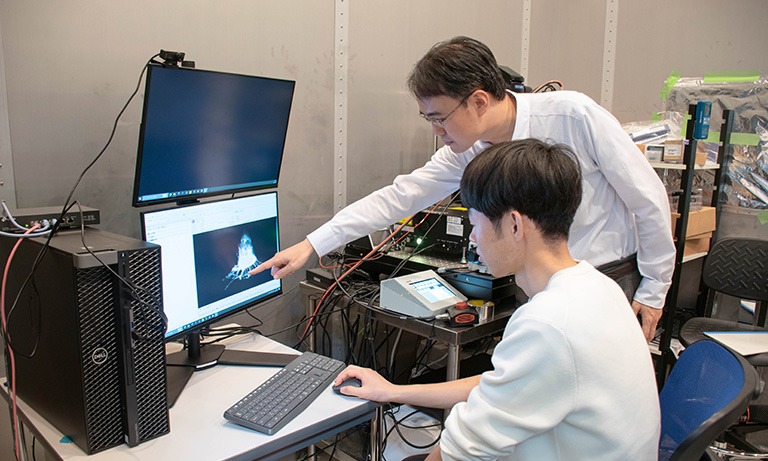
我们尚未广泛使用其他制造商的共聚焦显微镜,因此无法直接比较该装置与其他共聚焦显微镜的优劣,但我们发现该装置可在主机通电后约 15 分钟内开始成像,这相当有吸引力。控制MAICO用HCImage软件也相当直观且易于使用。此外,滨松光子学株式会社供应的分辨率模拟器相当不错,能够轻松提前检查可以实现的分辨率。
目前,我们正在使用 MAICO 对聚集神经元进行成像,我们非常满意其 3D 结构的清晰可视化。此外,即使对于在 2D 中生长的神经元,MAICO 也能提供比标准相机更高的分辨率。虽然我们目前正在使用 sCMOS 相机对神经元进行钙成像,但考虑到其快速的帧速率,未来可能将 MAICO 用于聚集体的钙成像。
成像示例
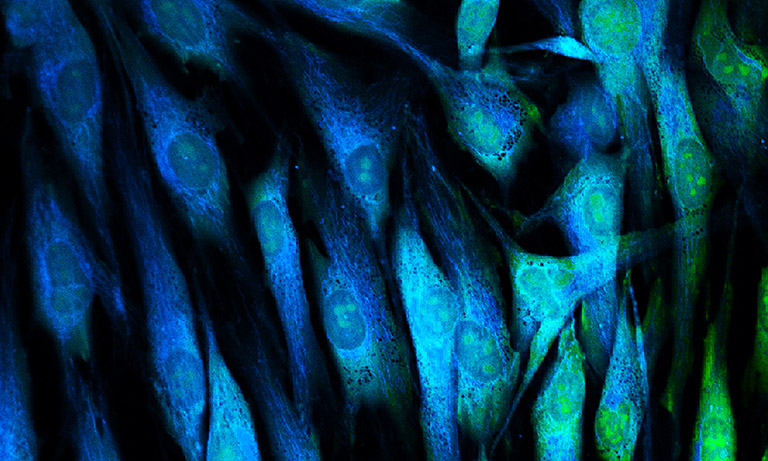
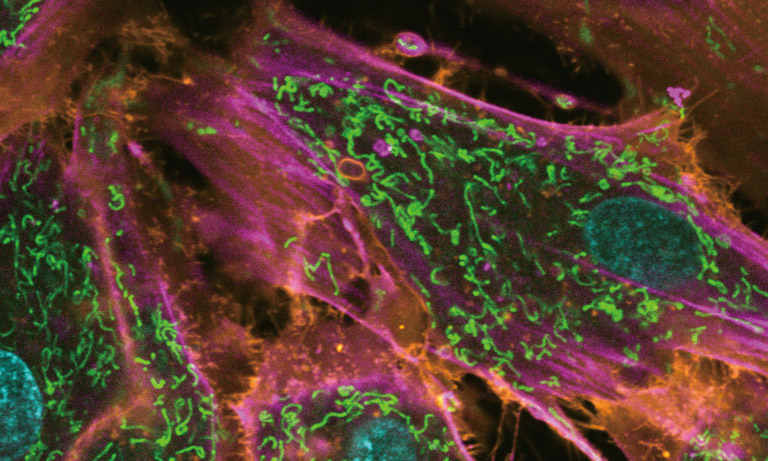
聚集的大鼠皮质神经元的3D图像(成像NeuO和GCaMP6s荧光)。
数据提供者:Hideaki Yamamoto,Research Institute of Electrical Communication (RIEC)下属Tohoku University的Nano-Integration Devices and Systems Laboratory for Nanoelectronics and Spintronics
培养大鼠皮质神经元的轴突和树突。

这是在微流体装置外捕获的神经元的最大投影图像。
数据提供者:Hideaki Yamamoto,Research Institute of Electrical Communication (RIEC)下属Tohoku University的Nano-Integration Devices and Systems Laboratory for Nanoelectronics and Spintronics
研究展望
能否谈谈未来的研究展望?
首要目标是增加微流体装置中的阱数,以构建更复杂的网络。以前,我们在2×2阱阵列中培养神经元,而现在我们创建了一个4×4阱阵列的微流体装置。我们正在尝试通过增加阱数及神经元数复制更复杂的神经元网络。此外,未来我们可能还会创建3D微流体装置,其微通道不仅沿着 XY 方向排列,还沿着Z方向排列。尽管利用现有制造工艺构建3D结构仍具挑战,但共聚焦显微镜赋予我们的3D观察能力,正激励我们勇敢迎接这一挑战。
第二个目标则是神经元聚集体的钙成像。截至目前,我们主要针对在盖玻片上或微流体装置内培养的二维神经元开展了钙成像研究。但如今有了MAICO,我们就可以针对聚集神经元进行钙成像。如果其效果良好,它将为我们的研究开辟新的方向,例如积极培养神经元聚集体。

关于多细胞神经生物计算:了解并推进生物霸权
能否谈谈新推出的“多细胞神经生物计算:了解并推进生物霸权”项目?
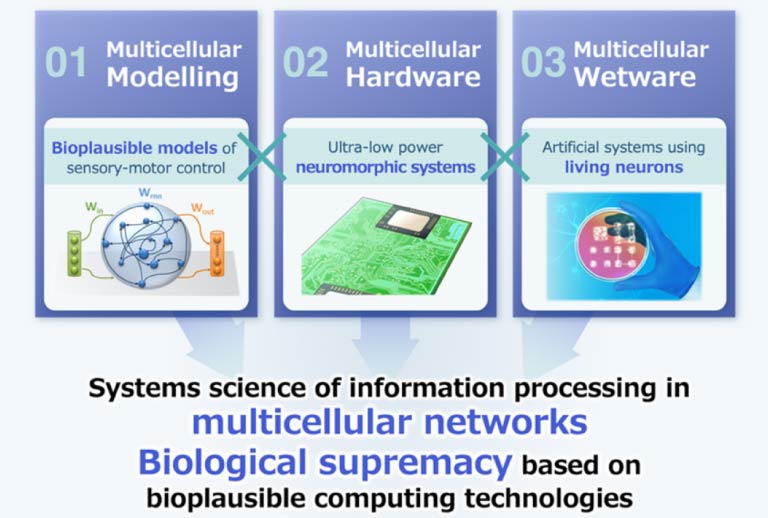
该项目于2024年4月启动,并得到变革性研究领域补助金 (A) 的支持。项目标题中的“推进生物霸权”意味着受生物机制启发的系统能够解决传统计算机难以实现的学习效率、能源效率和环境适应性等特定问题。如前所述,我们的大脑是由神经元构成的,这些神经元相互连接形成了网络。与晶体管或计算机和智能手机中的积分电路元件不同,神经元本质上是不稳定的。但我们的大脑能够自主且高能效地进行复杂的信息处理。这种特性并非由单个细胞产生,不能简单地解释为各个元件的总和。相反,大脑功能是通过各类神经元的精明排列和连接实现的,形成一个多细胞网络。在这个项目中,我们的目标是通过结合数学建模和体内外实验,来了解大脑是如何利用生物元素网络来处理信息并将这种了解转化为实际的系统应用。这项研究不仅有望加深对神经系统的基本了解,而且还有助于开发具有高计算效率、稳健性和适应性的创新计算技术。
为实现这一目标,该项目汇集了众多信息科学、生物工程、生物学和电子学等不同领域的研究人员。我们设定了三个重点研究领域:多细胞建模(基于生物实验的信息处理模型和学习规则的制定)、多细胞硬件(硬件功能的实现及在机器人中的应用)、多细胞湿件(利用培养细胞和人工重建生物功能验证数学模型和学习规则)。通过以上领域,我们正在挑战展示生物霸权,旨在利用生物学原理开发下一代信息和通信技术。
Researcher profile

Hideaki Yamamoto
Associate Professor, RIEC, Tohoku University
Associate Professor, Advanced Institute for Materials Research (AIMR), Tohoku University
Associate Professor, Department of Electrical, Information and Physics Engineering, Tohoku University
Associate Professor, Department of Electronic Engineering, Graduate School of Engineering, Tohoku University
Mar. 2009
Ph.D., Department of Nanoscience and Nanoengineering, Graduate School of Advanced Science and Engineering, Waseda University
Apr. 2009
JSPS Research Fellowship for Young Scientists (PD), Waseda University
Apr. 2010
JSPS Research Fellowship for Young Scientists (SPD), Tokyo University of Agriculture and Technology
Apr. 2013
Assistant Professor, Waseda Institute for Advanced Study (WIAS)
Apr. 2014
Assistant Professor, Frontier Research Institute for Interdisciplinary Sciences (FRIS), Tohoku University
May. 2018
Assistant Professor, AIMR, Tohoku University
Jan. 2020
Current Role

Hakuba Murota
Ph.D., Nano-Bio Hybrid Molecular Devices Laboratory, RIEC, Tohoku University
Mar. 2022
Bachelor's Degree in Engineering, Department of Electrical, Information and Physics Engineering, Tohoku University
Mar. 2024
Master's Degree in Engineering, Department of Electronic Engineering, Graduate School of Engineering, Tohoku University
Apr. 2024
Doctoral course, Department of Electronic Engineering, Graduate School of Engineering, Tohoku University
* 本页显示的内容基于 2024 年 10 月进行的采访。
其他案例研究

School of Bioscience and Biotechnology下属Tokyo University of Technology的Cosmetics Course之中的The Laboratory for Evolutionary Cell Biology of Skin正在研究表皮屏障的形成机理。为阐明表皮屏障的形成机理,有必要对表皮进行三维成像。为此,他们引进了我们的MAICO MEMS 共聚焦装置。
我们采访了该实验室的Takeshi Matsui教授,他介绍了MAICO MEMS共聚焦装置的引进背景、使用感受以及未来研究的展望。





- Confirmation
-
It looks like you're in the . If this is not your location, please select the correct region or country below.
You're headed to Hamamatsu Photonics website for (Chinese). If you want to view an other country's site, the optimized information will be provided by selecting options below.
In order to use this website comfortably, we use cookies. For cookie details please see our cookie policy.
- Cookie Policy
-
This website or its third-party tools use cookies, which are necessary to its functioning and required to achieve the purposes illustrated in this cookie policy. By closing the cookie warning banner, scrolling the page, clicking a link or continuing to browse otherwise, you agree to the use of cookies.
Hamamatsu uses cookies in order to enhance your experience on our website and ensure that our website functions.
You can visit this page at any time to learn more about cookies, get the most up to date information on how we use cookies and manage your cookie settings. We will not use cookies for any purpose other than the ones stated, but please note that we reserve the right to update our cookies.
1. What are cookies?
For modern websites to work according to visitor’s expectations, they need to collect certain basic information about visitors. To do this, a site will create small text files which are placed on visitor’s devices (computer or mobile) - these files are known as cookies when you access a website. Cookies are used in order to make websites function and work efficiently. Cookies are uniquely assigned to each visitor and can only be read by a web server in the domain that issued the cookie to the visitor. Cookies cannot be used to run programs or deliver viruses to a visitor’s device.
Cookies do various jobs which make the visitor’s experience of the internet much smoother and more interactive. For instance, cookies are used to remember the visitor’s preferences on sites they visit often, to remember language preference and to help navigate between pages more efficiently. Much, though not all, of the data collected is anonymous, though some of it is designed to detect browsing patterns and approximate geographical location to improve the visitor experience.
Certain type of cookies may require the data subject’s consent before storing them on the computer.
2. What are the different types of cookies?
This website uses two types of cookies:
- First party cookies. For our website, the first party cookies are controlled and maintained by Hamamatsu. No other parties have access to these cookies.
- Third party cookies. These cookies are implemented by organizations outside Hamamatsu. We do not have access to the data in these cookies, but we use these cookies to improve the overall website experience.
3. How do we use cookies?
This website uses cookies for following purposes:
- Certain cookies are necessary for our website to function. These are strictly necessary cookies and are required to enable website access, support navigation or provide relevant content. These cookies direct you to the correct region or country, and support security and ecommerce. Strictly necessary cookies also enforce your privacy preferences. Without these strictly necessary cookies, much of our website will not function.
- Analytics cookies are used to track website usage. This data enables us to improve our website usability, performance and website administration. In our analytics cookies, we do not store any personal identifying information.
- Functionality cookies. These are used to recognize you when you return to our website. This enables us to personalize our content for you, greet you by name and remember your preferences (for example, your choice of language or region).
- These cookies record your visit to our website, the pages you have visited and the links you have followed. We will use this information to make our website and the advertising displayed on it more relevant to your interests. We may also share this information with third parties for this purpose.
Cookies help us help you. Through the use of cookies, we learn what is important to our visitors and we develop and enhance website content and functionality to support your experience. Much of our website can be accessed if cookies are disabled, however certain website functions may not work. And, we believe your current and future visits will be enhanced if cookies are enabled.
4. Which cookies do we use?
There are two ways to manage cookie preferences.
- You can set your cookie preferences on your device or in your browser.
- You can set your cookie preferences at the website level.
If you don’t want to receive cookies, you can modify your browser so that it notifies you when cookies are sent to it or you can refuse cookies altogether. You can also delete cookies that have already been set.
If you wish to restrict or block web browser cookies which are set on your device then you can do this through your browser settings; the Help function within your browser should tell you how. Alternatively, you may wish to visit www.aboutcookies.org, which contains comprehensive information on how to do this on a wide variety of desktop browsers.
5. What are Internet tags and how do we use them with cookies?
Occasionally, we may use internet tags (also known as action tags, single-pixel GIFs, clear GIFs, invisible GIFs and 1-by-1 GIFs) at this site and may deploy these tags/cookies through a third-party advertising partner or a web analytical service partner which may be located and store the respective information (including your IP-address) in a foreign country. These tags/cookies are placed on both online advertisements that bring users to this site and on different pages of this site. We use this technology to measure the visitors' responses to our sites and the effectiveness of our advertising campaigns (including how many times a page is opened and which information is consulted) as well as to evaluate your use of this website. The third-party partner or the web analytical service partner may be able to collect data about visitors to our and other sites because of these internet tags/cookies, may compose reports regarding the website’s activity for us and may provide further services which are related to the use of the website and the internet. They may provide such information to other parties if there is a legal requirement that they do so, or if they hire the other parties to process information on their behalf.
If you would like more information about web tags and cookies associated with on-line advertising or to opt-out of third-party collection of this information, please visit the Network Advertising Initiative website http://www.networkadvertising.org.
6. Analytics and Advertisement Cookies
We use third-party cookies (such as Google Analytics) to track visitors on our website, to get reports about how visitors use the website and to inform, optimize and serve ads based on someone's past visits to our website.
You may opt-out of Google Analytics cookies by the websites provided by Google:
https://tools.google.com/dlpage/gaoptout?hl=en
As provided in this Privacy Policy (Article 5), you can learn more about opt-out cookies by the website provided by Network Advertising Initiative:
http://www.networkadvertising.org
We inform you that in such case you will not be able to wholly use all functions of our website.
Close